The Complete NCAA Recruiting Timeline: What to Do From Freshman to Senior Year
A year-by-year guide to the NCAA recruiting process. Learn exactly what steps to take each year of high school to maximize your chances of playing college sports.
The NCAA recruiting process is one of the most confusing and high-stakes journeys a family can go through. There are strict rules about when coaches can contact you, when you can visit campuses, and when you need to register with the NCAA Eligibility Center. Miss a deadline and your student-athlete could lose out on opportunities that took years to build.
This guide breaks down exactly what your family should be doing each year of high school. Whether your child plays football, soccer, volleyball, swimming, or any other NCAA-sanctioned sport, this timeline will keep you on track.
NCAA rules change periodically. This guide reflects the rules as of the 2025-2026 academic year. Always verify deadlines and contact rules directly with the NCAA Eligibility Center at eligibilitycenter.org.
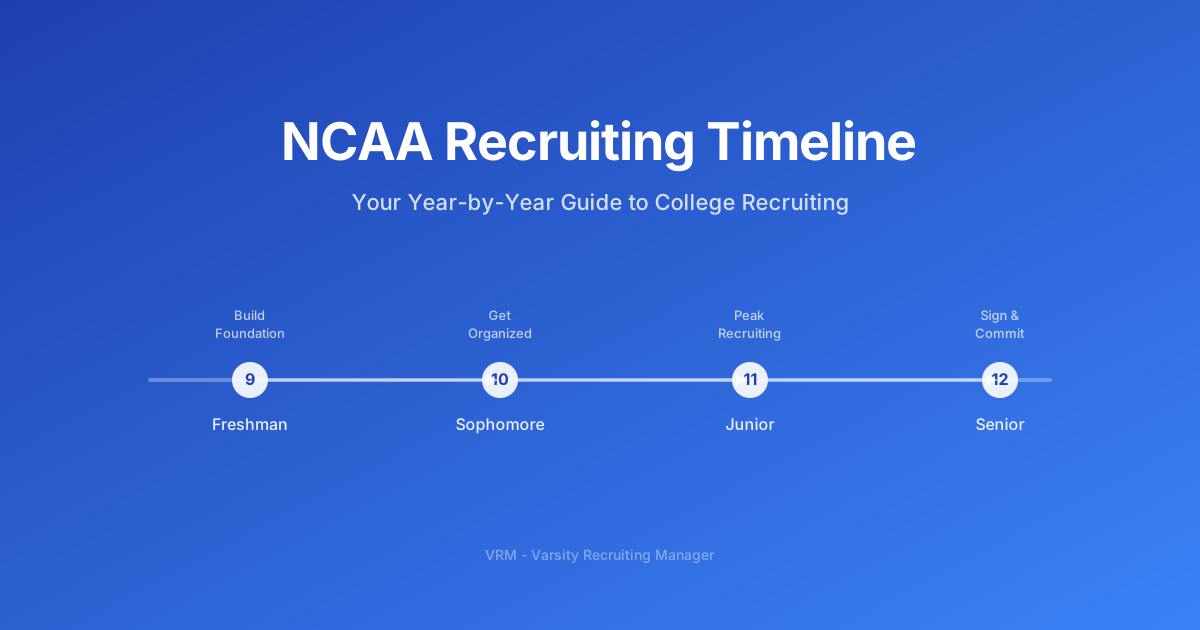
Freshman Year: Build the Foundation
Freshman year might feel too early to think about college recruiting, but the habits and decisions made now set the tone for everything that follows. Coaches at every level have said the same thing: they want to see a trajectory. That starts in ninth grade.
Focus on Academics First
The NCAA has minimum academic requirements that every student-athlete must meet to compete at the Division I or Division II level. For D1, you need to complete 16 core courses during high school with a minimum GPA in those courses. For D2, the requirement is also 16 core courses but with a slightly different sliding scale.
The key detail most families miss: only courses that appear on your high school's approved list of NCAA core courses count toward these requirements. Not every honors class or elective qualifies. Visit the NCAA Eligibility Center website and look up your specific high school's list of approved courses. Then work with your guidance counselor to make sure your freshman course schedule includes the right classes.
Aim for the strongest grades possible right now. Your core-course GPA after freshman year is the easiest to maintain or improve, and the hardest to recover from if it starts low.
Play Multiple Sports
There is growing evidence that multi-sport athletes develop better overall athleticism, experience fewer overuse injuries, and are actually more attractive to college recruiters than single-sport specialists at this age. Freshman year is the perfect time to play two or even three sports. You will have plenty of time to specialize later.
Start Building a Highlight Video
Even though you probably will not send highlight footage to coaches this year, start the habit of recording games and practices. Ask a parent or teammate's parent to record full games when possible. Having footage from freshman year gives you a baseline and ensures you will not be scrambling to find clips later.
Sophomore Year: Get Organized and Get Noticed
Sophomore year is when the recruiting process starts to become real. Coaches at many programs are already identifying prospects, and the work you do now can put you ahead of the majority of families who wait until junior year.
Register With the NCAA Eligibility Center
You can create your NCAA Eligibility Center account as early as sophomore year. You do not need to finalize everything yet, but getting registered early means you can start tracking your core courses, test scores, and amateur status. Go to web3.ncaa.org/ecwr3 to create your account.
Research Schools and Programs
Start building a list of colleges that interest you. At this stage, cast a wide net. Include schools of different sizes, divisions, and locations. Do not focus only on the big-name programs. There are over 1,100 NCAA member institutions across three divisions, and the right fit might be a school you have never heard of.
For each school on your list, find out who the head coach and recruiting coordinator are for your sport. Note their email addresses and any recruiting questionnaires available on the athletic department's website.
Attend Camps and Showcases
College camps, especially ones hosted on a university campus by the school's own coaching staff, are one of the best ways to get evaluated. Unlike travel tournaments where a coach might see you for five minutes, a camp lets you work directly with the coaching staff for several hours or even a full weekend.
Look for camps at schools on your target list. These are also a great way to experience the campus and culture without the formality of an official visit.
Junior Year: The Most Critical Year
If there is a single year that can make or break the recruiting process, it is junior year. This is when the majority of recruiting activity happens, when coaches are allowed to initiate contact, and when many commitments are made.
Understand the NCAA Contact Rules
Starting June 15 after your sophomore year (for D1), college coaches can begin sending you recruiting materials and making phone calls. Before that date, coaches are severely limited in how they can communicate with you. However, there is an important nuance: you and your family can reach out to coaches at any time. The restrictions apply to what coaches can initiate, not what you can initiate.
Use this to your advantage. Send a well-written introductory email to coaches on your target list. Include your academic information, athletic stats, highlight video link, and tournament schedule so they can watch you play.
Take the SAT or ACT
The NCAA requires standardized test scores for Division I and Division II eligibility. Take the SAT or ACT early in your junior year so you have time to retake it if needed. When you register for the test, use the NCAA Eligibility Center code (9999) as one of your score recipients so your scores are sent directly.
Your test scores work in combination with your core-course GPA on a sliding scale. A higher GPA lets you qualify with a lower test score, and vice versa. Check the NCAA's sliding scale chart to understand exactly where you need to land.
Send Your Highlight Video to Coaches
By junior year, your highlight video should be polished and targeted. Keep it under five minutes, lead with your best plays, and include your name, jersey number, position, graduation year, and contact information. Upload it to a platform like Hudl or YouTube and include the link in every email you send to a coach.
Take Unofficial Visits
You are allowed unlimited unofficial visits at any time during high school. An unofficial visit means you pay your own way, but you get to tour campus, meet with coaches, watch a practice, and experience the school firsthand. Junior year is the ideal time for these visits because you can narrow your list before the official visit invitations come.
Narrow Your List
By the end of junior year, you should have a realistic top ten to fifteen schools, with a mix of reach schools, target schools, and likely schools. This is also when you should honestly assess what level of competition is the right fit. Playing at a D2 or D3 school where you start and thrive is a far better experience than sitting on the bench at a D1 program.
Senior Year: Close the Deal
Senior year is about execution. The groundwork has been laid, and now it is time to make final decisions, complete paperwork, and sign on the dotted line.
Understand Signing Periods
The NCAA has specific signing periods depending on your sport. For most sports, the Early Signing Period begins in November of senior year, while the Regular Signing Period starts in February. Some sports, like football, have a separate early signing period in December. Know your sport's exact dates because missing the window means waiting for the next one.
Take Official Visits
Student-athletes are allowed up to five official visits to D1 schools (starting on or after August 1 of junior year) and unlimited official visits to D2 schools. On an official visit, the school pays for your transportation, meals, and lodging for up to 48 hours. Use these wisely on your top schools.
Complete Your NCAA Eligibility Center Profile
Make sure your final transcript, test scores, and amateur certification are all submitted to the NCAA Eligibility Center. Your high school counselor will need to send your final transcript after graduation, but you should request it early and follow up to make sure it happens.
Sign Your National Letter of Intent
The National Letter of Intent (NLI) is a binding agreement between you and the school. Once you sign, you are committed to attend that institution for one academic year. Read the NLI carefully and make sure you understand the financial aid agreement that accompanies it. If anything is unclear, ask questions before you sign.
Do not feel pressured to sign early. If you need more time to make the right decision, communicate that to the coaching staff. A good program will respect your process.
Keep Your Grades Up
One of the most common senior year disasters is letting grades slip after signing. The NCAA Eligibility Center evaluates your final transcript, and your admission to the college is typically contingent on maintaining your academic standing. Senioritis can cost you everything you worked for.
Key Dates at a Glance
Here is a quick reference for the most important dates in the NCAA recruiting timeline:
| When | What | |---|---| | Freshman Year | Begin tracking core courses, play multiple sports | | Sophomore Year | Register with NCAA Eligibility Center, attend camps | | June 15 after Sophomore Year (D1) | Coaches can begin contacting you | | Junior Year Fall | Take SAT/ACT, send highlight videos to coaches | | Junior Year Spring | Take unofficial visits, narrow school list | | August 1 before Senior Year | Official visits can begin (D1) | | November Senior Year | Early Signing Period (most sports) | | February Senior Year | Regular Signing Period | | Spring Senior Year | Final transcript sent to NCAA Eligibility Center |
Making the Most of the Process
The recruiting process rewards families who start early, stay organized, and communicate proactively. Most coaches will tell you they pass on talented athletes every year simply because those athletes or their families never reached out.
You do not need to be a five-star recruit to play college sports. The vast majority of college athletes are at D2, D3, and NAIA schools where the experience is just as meaningful and the education is often outstanding. Cast a wide net, be realistic about fit, and stay disciplined with the timeline above.
The families who succeed in this process are the ones who treat it like a project: set milestones, track progress, follow up, and never assume someone else is handling it for you.